5 Everyday Language-Boosting Activities (That Won’t Feel Like Homework)
Give your preschooler a vocabulary boost without turning your home into a classroom. These 5 simple, everyday activities—like cooking, singing, and playtime chats—make learning new words natural, fun, and stress-free. Perfect for moms who want to blend play with language development.
SPEECH AND LANGUAGE THINGS
Brick Language- Traci Curlis
9/5/20252 min read
5 Everyday Language-Boosting Activities (That Won’t Feel Like Homework)
Hey, Mama! If you're looking for easy, playful ways to give your preschooler’s vocabulary a boost—without turning your living room into a classroom—you're in the perfect spot. These everyday activities are all about having fun, chatting, and sneaking in new words while everyone (yes, even you!) enjoys the time together.
1. ‘Treasure Hunt’ Clues at Home
Tweak a simple scavenger hunt into a creative language game:
Write clues like “something yellow, a fruit, that monkeys like” (banana) or more advanced versions like “hidden in a kitchen machine that washes clothes”.
As they follow clues, they learn colors, categories, and positional words—all while heading toward a little reward.
Why it works: You’re making words part of an adventure. Clues prompt listening, thinking, and talking—all disguised as play.
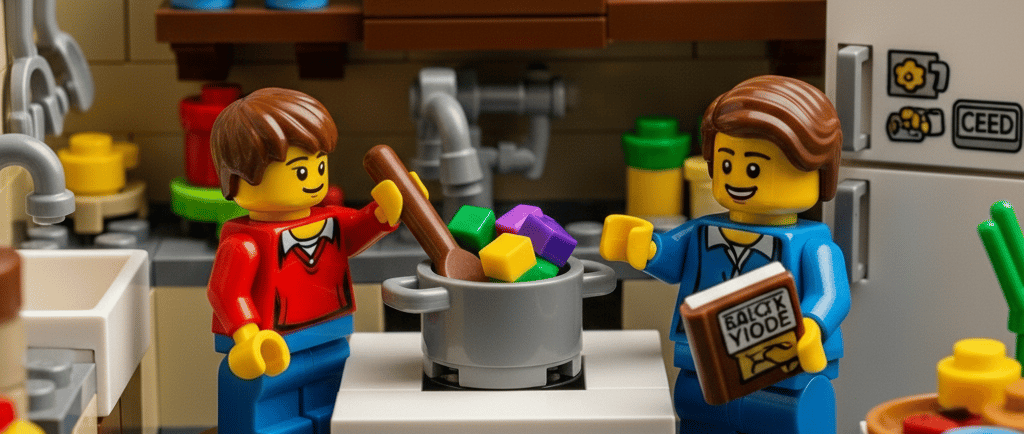
2. Cooking Together (No Pressure, Just Play)
Invite your little one into the kitchen:
Narrate what you’re doing using words like spoon, cut, mix, or cold
Ask simple questions like “Can you stir the chocolate milk?” or “How many slices do we need?”
Why it works: Recipes naturally bust open new vocabulary and concepts—and snack prep? Total win-win.
3. Talk Through Your Daily Routine
Even simple tasks are language goldmines:
Narrate what you’re doing: “I’m putting on your red socks,” or “Now we wash the crunchy carrots”
During meals or baths, add flavor words like foamy, slimy, sparkly or bouncy
Why it works: Everyday chatter becomes a language lesson wrapped in love—no flashcards needed.
5. Sing, Rhyme, and Play with Sounds
Tap into the power of music and rhythm:
Sing nursery rhymes or make your own: “Jumpy kangaroo in a shoe, bouncing on sticky glue”
Use songs like “Old MacDonald” or “The Wheels on the Bus” with movements.
Why it works: Songs stick. They hook kids with melody while sneaking in phonics, rhyme, and new vocabulary.
Quick Recap
Why It Works:
Treasure Hunt
Makes problem-solving fun and language purposeful
Cooking Together
Teaches real words in context—and snacks are a bonus
Narrating Routines
Embeds language in everyday love and routine
Songs & Rhymes
Musical memory
anchors new words and sounds